Little eyes,
safely looked after.
Guby is a gentle little owl that helps your child hold their phone a healthy distance away - quietly, in the background, with no nagging from you.
The best screen distance is no screen at all - we know. Guby is for the screen time that happens anyway.

On Android only. For iPhone families, we warmly recommend Apple's built-in Screen Distance feature - it does a similar job, right inside iOS.
“Hi! Let's give those eyes some room.”
Quiet protection, every screen
Guby looks after them quietly
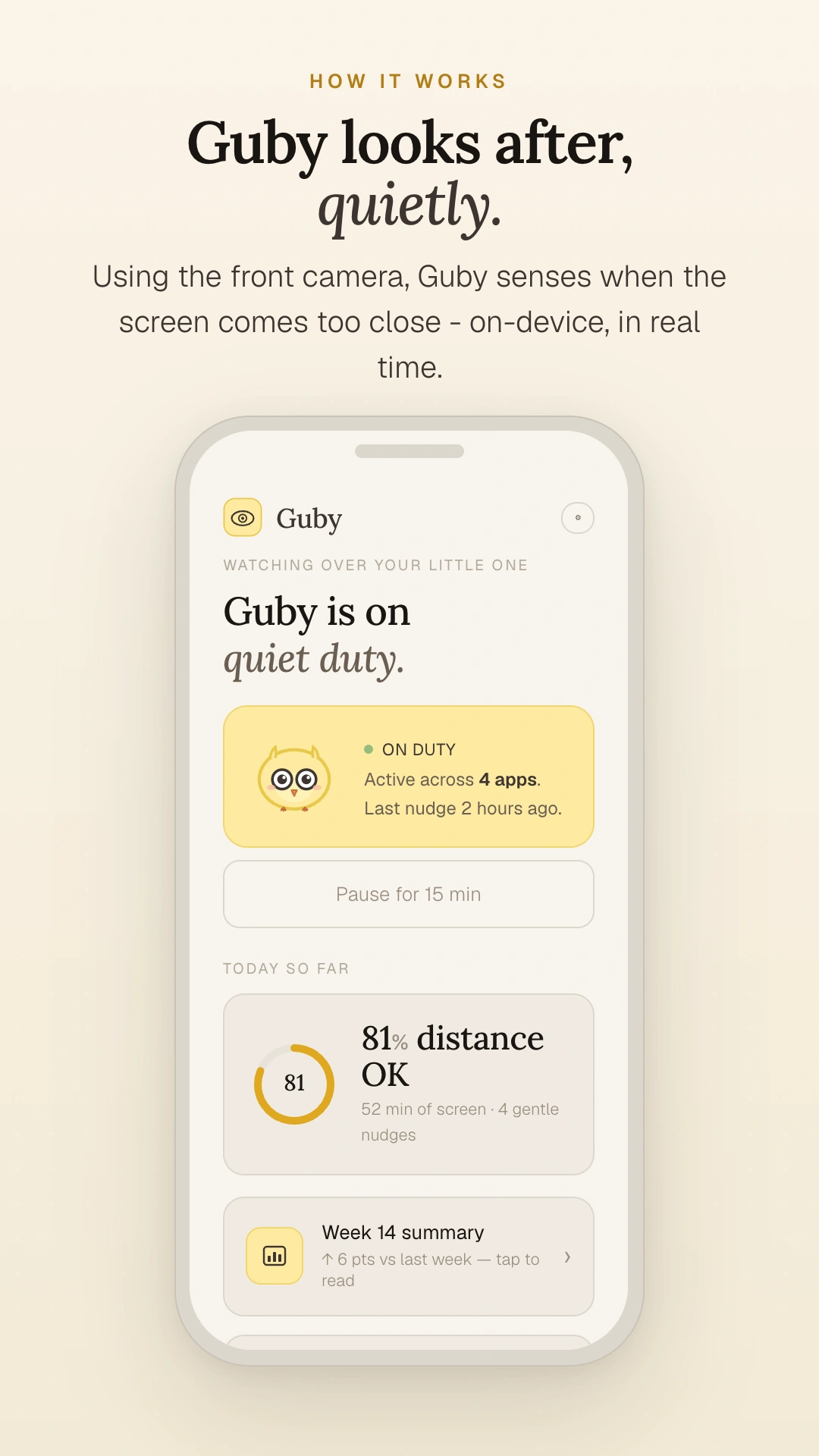
Using the front camera, Guby gently senses when the screen comes too close to your child's eyes - no recording, no internet needed.
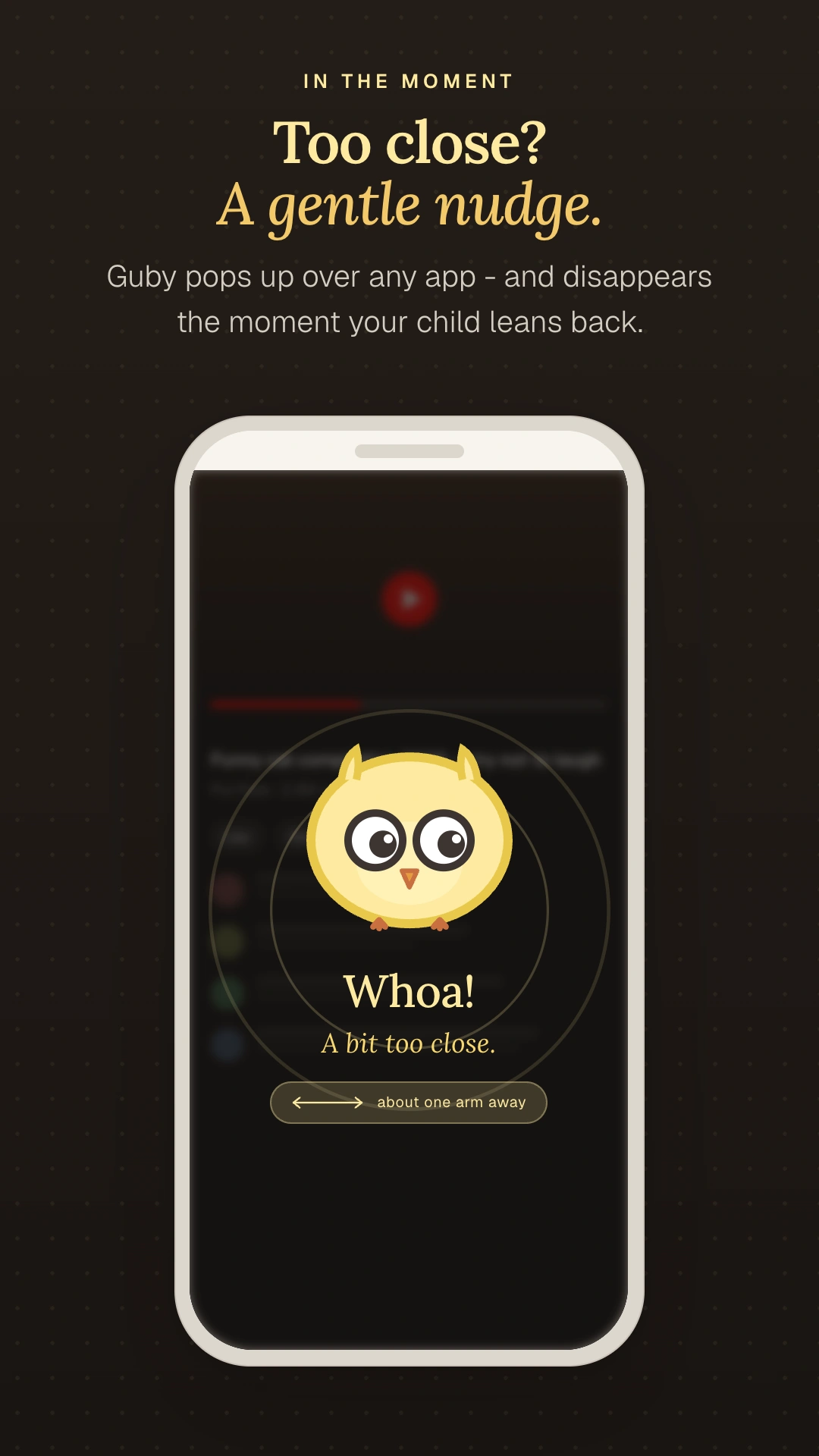
A friendly nudge
Guby pops up with a soft, playful reminder - and disappears the moment your child moves back to a healthy distance.
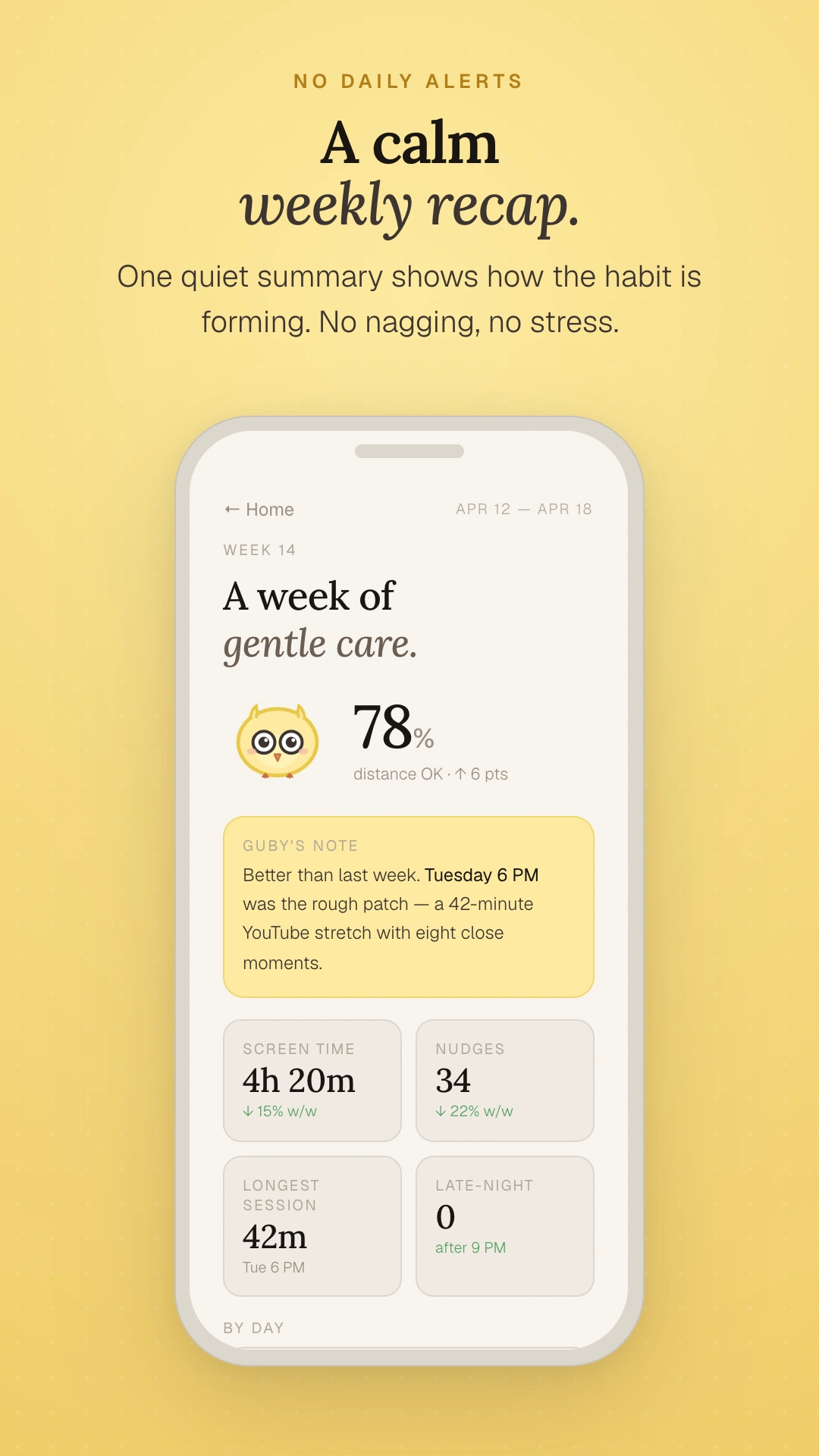
A calm weekly recap
One quiet email each week shows how the habit is forming. No daily alerts, no stress, no notifications buzz.
Made for families with 2-to-8-year-olds, on Android phones and tablets.
Requires Android 8.0 or newer · front camera
Calm by design
Three quiet screens your child and you will see most often.
Honest numbers, no alarm
Every week, a single calm note in your inbox - built from anonymous counts, never from photos.
Tuesday was your child's best day
Eyes at a healthy distance 99.9% of screen time this week.
16 gentle nudges - each lasted about 11s before your child eased back.
35h 5m of screen time; longest single stretch 44m.
Built for trust. Here's exactly what stays - and what we send.
No video. No photos. No identity. The numbers we receive describe how often Guby helped - not who Guby helped. Full details in our Privacy Policy, or read more on children's eye health on our blog.
Things parents ask
Does Guby record video?
Will it slow down or drain my phone?
What about babies or older kids?
Does it work without internet?
What's in the weekly email?
Why no iOS?
For professionals
Do you guide families on screen habits?
If you're an eye-care professional or a school, we've written plain, honest pages on what Guby does, where its limits are, and how to point families to it.