Blue light and children's eyes: what's hype and what's real
Do blue light glasses protect your child's eyes from screens? Here's what the actual evidence says, and the few things that genuinely help.
On this page
You're at the optician picking out a pair of glasses, or scrolling a shopping app at 11pm, and there it is. A small box, a confident promise: blocks harmful blue light, protects young eyes. Your child spends a fair bit of time on a tablet, so of course you pause. For about forty rupees more, or a few dollars, why wouldn't you?
It's a fair question, and the answer is genuinely reassuring, just not in the way the box suggests. So before you spend anything, here's what blue light actually is, what the research has and hasn't found about it and children's eyes, and the handful of things that really do matter.
One thing first. This is general information, not medical advice. If you're worried about your child's eyes or vision, the person to talk to is your child's eye doctor.
What is blue light, and where does it come from?
Blue light is just one slice of the visible spectrum, the high-energy end, near violet. It's nothing exotic. It's in daylight, in fact daylight is the biggest source of it by a wide margin.
This is the part the marketing tends to skip. The sun pours out far more blue light than any phone or tablet ever could. As the American Academy of Ophthalmology puts it, the amount of blue light from screens is a tiny fraction of what we get from being outside on an ordinary day. A child who plays in the garden for an hour has soaked up more blue light than a long evening with a cartoon.
Screens emit a little of it, yes. But the dose, set against sunlight, is small.
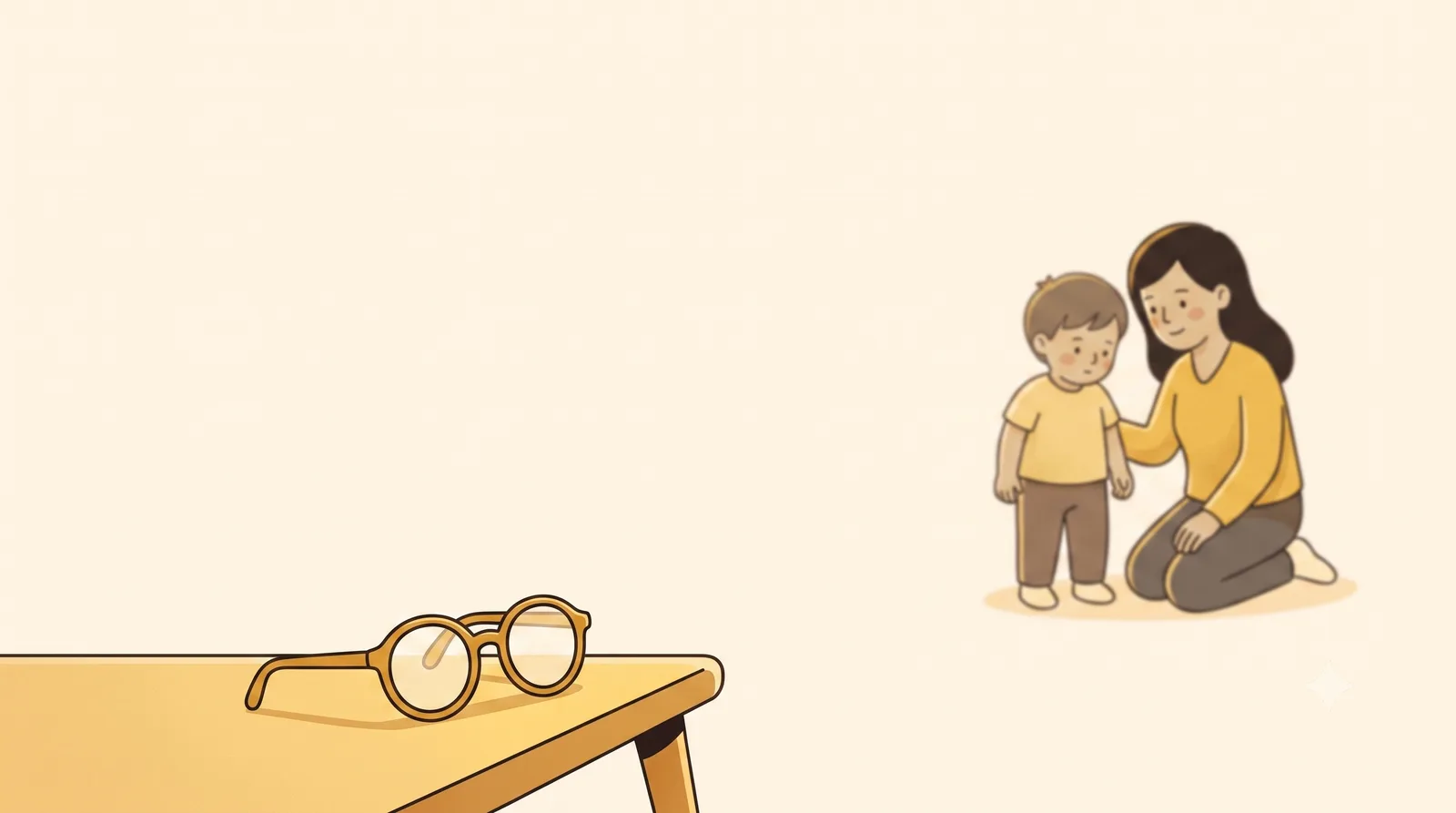
Does blue light from screens damage a child's eyes?
This is the worry the glasses are sold against, so it's worth being plain. The current evidence does not show that the blue light coming off everyday screens damages the eyes.
The AAO is direct about it. In their guidance, they state that there is no scientific evidence the light from computer screens damages the eyes, and the Academy does not recommend any special eyewear for screen use. That position covers children too. On their page about kids and screens, they note that the eye strain children feel is temporary, and no permanent damage is being done.
The American Academy of Pediatrics lands in the same place. Their parent-facing guidance on screens and children's eyes says plainly that there is no evidence blue light is harmful to the eyes.
So where do the scary headlines come from? A lot of them trace back to lab studies that blast cells or animal retinas with intense, concentrated light, nothing like a child holding a tablet on the sofa. Interesting science, but a long way from your living room. The leap from "very high doses can affect cells in a dish" to "your phone is hurting your daughter's eyes" isn't one the evidence supports.
Do blue light glasses actually help?
If the light isn't the problem, it follows that filtering it out won't fix much. And that's roughly what the best evidence shows.
In 2023, Cochrane, the gold standard for pulling together medical research, published a systematic review of blue-light filtering glasses. The reviewers gathered seventeen randomised trials across six countries. Their conclusion, in short, was that these lenses probably make no meaningful difference to eye strain from screen use, and probably don't improve sleep quality or visual performance either. They also found no evidence the lenses protect the retina.
That's adults, mostly, since that's where most of the trials sit. But there's no good reason to expect children's eyes to respond differently to a filter that does little in grown-ups, and no body of evidence showing the glasses help kids specifically. It's why the AAO doesn't recommend them, for adults or children.
None of which means the glasses are dangerous. They're not. If your child already wears them and likes them, there's no harm in carrying on. The honest point is narrower: don't buy them expecting they'll shield your child's eyes from screens, because that's not a thing they reliably do.
So why do my child's eyes feel tired after screens?
Here's the bit that gets lost. Children's eyes really can feel tired, dry, or sore after a long session with a screen. That part is real. It just isn't the blue light doing it.
The cause is how the eyes are used, not the light they take in. The AAP points to a simple culprit: we blink far less when we're concentrating on a screen, which leaves the eyes dry and scratchy. Add long stretches of focusing up close, often too close, with no break, and you get the gritty, headachy feeling that has a name, digital eye strain.
That's good news, really. It means the fix is about habits, not gadgets. The same things that ease eye strain in a child are things you already have to hand, and we go into them in more depth in our piece on eye strain in children.
What actually helps a child's eyes around screens?
Four things carry almost all the weight, and not one of them is a special pair of glasses.
Distance. Screens held too close are the quiet source of a lot of strain, and small children, with their short arms and their habit of pulling things right up to their nose, are the worst offenders. The AAO suggests keeping a screen about an arm's length away and a little below eye level. We've written a full guide to safe screen distance for children if you'd like the detail, including why young kids drift so close in the first place.
Breaks. Eyes locked at one near distance for ages are eyes that get tired. The old standby is the 20-20-20 rule, championed by the American Optometric Association: every 20 minutes, look at something at least 20 feet away for about 20 seconds. A young child won't time themselves, so for them it's less a rule and more a rhythm you set, a pause, a stretch, a glance out of the window.
Outdoor time. This is the one with the strongest science behind it. Time spent outdoors in early childhood is linked to a slower march of short-sightedness, or myopia, the thing where distant things turn blurry. Both the AAO and the AAP point to it. Daylight does something for developing eyes that an indoor screen, blue light filter or not, simply can't. An hour of running about outside is worth more than any lens.
Sleep. This is the one place blue light genuinely earns a mention, just not the one the glasses promise. Bright screens late in the evening can make it harder for a child to fall asleep, because that light nudges the body's clock. The AAP's advice here is refreshingly low-tech: put the screens away an hour or so before bed. No special glasses needed, just an earlier off-switch.
If a screen does end up on after dark, the phone itself is a better tool than a lens. Recent Android releases ship an eye comfort or night light setting that warms the display on a schedule, and it's worth switching on. It's the same thinking behind one small touch in our own app, Guby: when the room light drops and the phone has one, it nudges you towards that built-in setting rather than reinventing it, and on older phones that never got one, it lays down its own warm tint instead. A modest comfort measure for evenings, not a shield against damage that isn't happening.
If your child is on the younger side, our notes on screen time for toddlers cover how to fold these into a small one's day without turning every evening into a battle.
The honest summary
Blue light from screens is a smaller worry than the marketing wants you to believe, and blue light glasses for kids are a solution to a problem that, as far as the evidence goes, mostly isn't there. The eye strain children feel is real, but it comes from how they use screens, too close, too long, too few breaks, and that's something you can actually do something about.
So keep the screen at a sensible distance, build in pauses, get them outside, and guard the hour before bed. Those four are dull next to a shiny box that promises protection, but they're the ones with the evidence on their side.
And if anything about your child's eyes or vision is nagging at you, a squint, a complaint that things look blurry, a head that keeps tilting, don't try to read the tea leaves online. Book a proper eye check. A real exam with a real eye doctor will always tell you more than any pair of glasses sold off a shelf.
Found this useful?
Send it to a parent who’d want it.
Related reading
A parent's guide to children's eye check-ups: when, where, what happens
When should a child's eyes be checked, and how is a real exam different from the screening at school? A plain guide to the schedule, what happens, and the signs that mean go sooner.
children's eyes · eye health
Eye strain in children: signs, causes, and quick fixes
The eye rubbing after a long cartoon, the 'my eyes are tired'. Here's what digital eye strain in children actually is, why it happens, and the small fixes that help.
children's eyes · eye health