A parent's guide to children's eye check-ups: when, where, what happens
When should a child's eyes be checked, and how is a real exam different from the screening at school? A plain guide to the schedule, what happens, and the signs that mean go sooner.
On this page
You take your child for jabs, for height and weight, for the dentist once the teeth are in. Eyes are easy to leave off the list, partly because a small child rarely complains. A blurry world is just the world they've always known, so they don't think to mention it.
That's the quiet problem with children's eyes. A lot can be picked up early and sorted easily, but only if someone actually looks. This is a guide to when that look should happen, who does it, and what a young child's eye exam is really like, including the kind for a child far too small to read a single letter.
One thing up front. This is general information, not medical advice. For anything specific to your child, talk to your child's eye doctor.
When should my child have their eyes checked?
There's a schedule, and it starts earlier than most parents expect.
It begins at birth. In the newborn days, a paediatrician or the delivering doctor looks at a baby's eyes for the basics, things like cataracts, infections, and the red reflex, the healthy glow you sometimes see in photos. The American Academy of Ophthalmology lists this first check as part of newborn care, with a fuller exam by an ophthalmologist if the baby was premature, shows signs of eye trouble, or has eye disease in the family.
Next comes the first year. Somewhere between six and twelve months, a baby's eyes get a closer look at a well-child visit, checking alignment, movement, and that both eyes are developing in step. The American Optometric Association recommends a first thorough eye assessment at about six months of age, and in the United States its InfantSEE programme offers exactly that, a full infant assessment between six and twelve months, at no cost. We'll come back to what that involves, because a six-month-old obviously can't read a chart.
Then the toddler years. Between roughly one and three, the focus is healthy development, often using a special camera (photoscreening) that can catch the things which lead to a lazy eye before anyone would notice with the naked eye.
Around age three, proper vision testing usually begins, once a child is old enough to name letters or pictures across a room. From here the AAO suggests a check around age three, again at four and five, and then every year or two through the school years. The AAP schedule is similar, screening at three, then yearly to about six, and periodically after that. The exact ages vary a little between bodies; the shape is the same. Early, then before school, then steadily through it.
So even if nothing seems wrong, the rough rhythm is: newborn, somewhere in the first year, around age three, before starting school, and then on a regular beat after that.
Is the screening at school the same as a real eye exam?
Short answer: no, and this trips up a lot of families.
A school screening, or the quick check at a health camp or a well-child visit, is a brief pass to flag children who might have a problem. It's a coarse net. It usually tests how well a child sees a chart from a distance and not much else. Useful, fast, free, worth doing. But it is a sieve, not a diagnosis.
A full eye exam is a different thing entirely. An eye doctor checks how the two eyes work together, how well they focus up close, the health of the eye inside and out, and often dilates the pupils with drops to see properly to the back of the eye. The American Optometric Association is blunt about the gap: a child can pass a screening and still have an eye or vision problem, and only a full exam gives the complete picture.
Here's the bit that catches people out. A screening leans heavily on distance vision, so it's good at spotting short-sightedness, the child who can't read the board. It's far weaker at catching long-sightedness, where a child sees the distance chart perfectly yet strains to focus up close, which is where reading and headaches live. The National Eye Institute makes the same point in plainer terms: a screening identifies who needs a closer look, it doesn't replace the exam itself.
The takeaway isn't to skip the screening. It's to not treat "passed the school check" as "eyes are fine, no need to go". A passed screening and a full exam are not the same reassurance.
What actually happens at a young child's eye exam?
This is the part parents worry about, usually picturing a toddler being asked to read letters they don't know yet. The reassuring truth: a good children's eye doctor doesn't need your child to read, or even to talk.
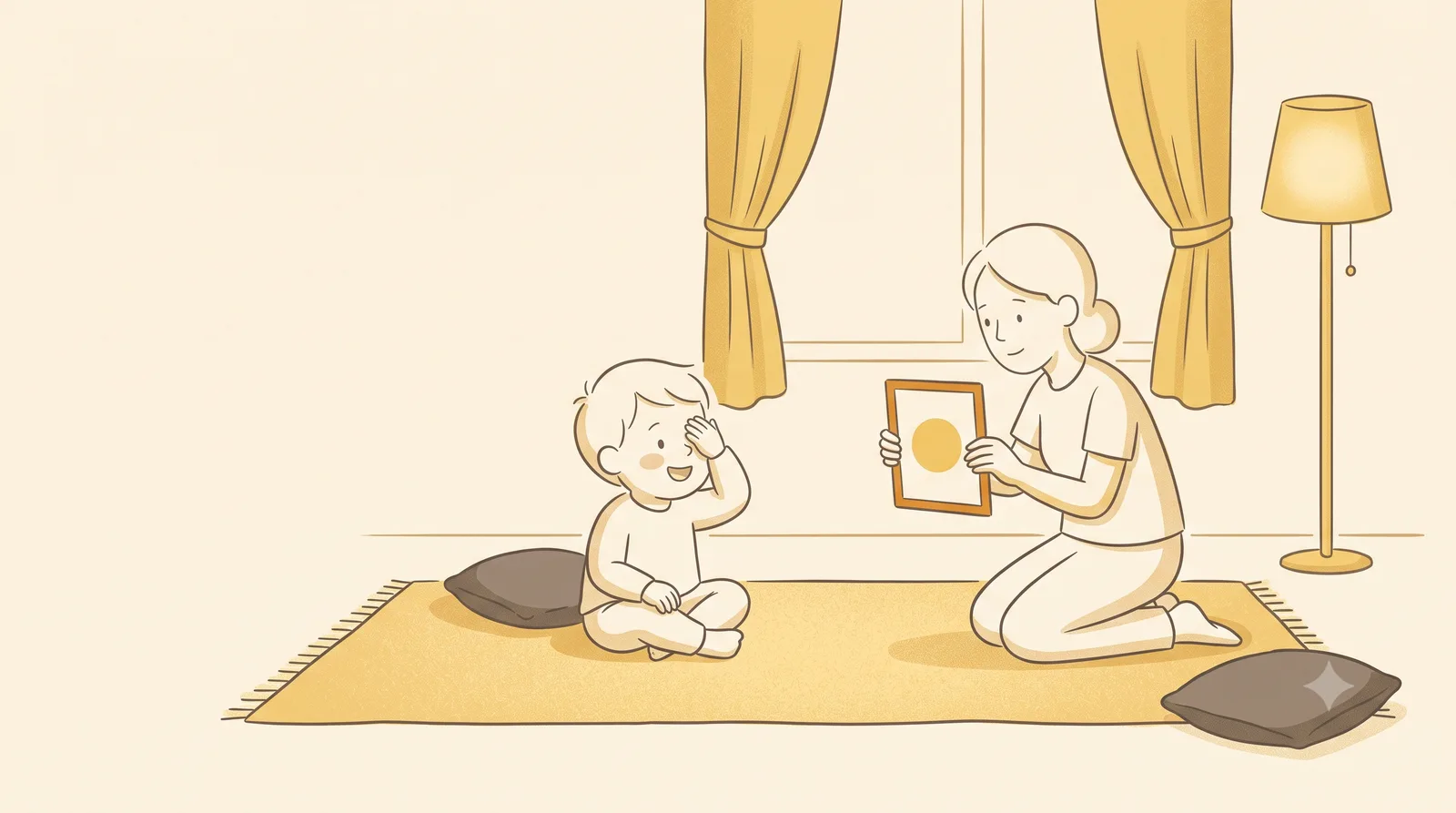
For a baby or a pre-reader, the whole exam is built around play and observation. Acuity gets tested with lights, toys, and patterns rather than letters, to see whether the baby fixes on something and follows it as it moves. The InfantSEE programme describes this clearly: the doctor catches the baby's attention with a light or a toy, sees how each eye tracks it, and checks the eyes line up and move together.
To work out whether a child needs glasses, the doctor shines a small handheld light into the eyes and reads how the light reflects back, a technique called retinoscopy. It needs no answers from the child at all. Often the doctor puts in dilating drops first, which relax the focusing and widen the pupil so the back of the eye can be seen and the prescription measured accurately. The drops sting for a second and leave the eyes light-sensitive for a few hours, so bring a hat or sunglasses for the trip home.
There's usually a chat too, and it matters. The doctor will ask about the pregnancy and birth, about family history of glasses or eye conditions, and about whether your child is hitting the usual milestones. Honest answers here genuinely shape what the doctor looks for.
For an older child who can name things, the letter or picture chart comes in, one eye covered at a time, sometimes the row of pictures (a house, an apple, a duck) for a child who doesn't have letters yet. The colourful frame of lenses may swing into place, the "better like this, or like this" routine. Most of it feels like a game, and the good clinics make it one.
The honest note: some children cry, some won't sit still, and a thorough doctor works around that without forcing it. A wriggly toddler is normal and expected. It doesn't ruin the exam.
Where do I take my child for an eye test?
You want someone who actually works with children, not just an adult eye clinic that occasionally sees one.
The two professionals to look for are a paediatric ophthalmologist (a medical eye doctor with extra training in children's eyes, who can diagnose and treat the full range of conditions) and an optometrist who regularly sees children (who tests vision, prescribes glasses, and refers on when something needs a specialist). For a routine check or a glasses question either is a fine first stop. For a suspected squint, a lazy eye, or anything to do with the eye's health, a paediatric ophthalmologist is the one you want.
In India, most cities have eye hospitals with a dedicated paediatric department, and many run children's eye clinics specifically. A paediatrician can point you to a good one, and word of mouth from other parents is worth a lot here. Elsewhere it's much the same: ask your family doctor or paediatrician for a referral to a children's eye specialist. Wherever you are, school vision screenings are a starting point, not a substitute for one of these full exams.
What signs mean I shouldn't wait for the next check-up?
The schedule is for when all seems well. If you're noticing something, you don't wait for the next milestone, you book a visit.
A few things are worth acting on sooner rather than later. One eye that turns in or out, or doesn't seem to move with the other, is worth a prompt check, especially in a baby past a few months old, because eye alignment is closely tied to a lazy eye and that's most treatable when caught early. The same goes for a white or cloudy look in the pupil, particularly in a photo where one eye glows red and the other doesn't, which always deserves a same-week call to a doctor.
Persistent squinting to see, sitting right up against the screen and shuffling back when you move them, a constant little head tilt, or sore eyes and headaches that cluster after reading and close work, any of these showing up again and again is a reason to get the eyes checked rather than wait. We've written about these everyday hints in more detail in six signs your child might need glasses. And the AAP is clear that any vision complaint, family history, or odd visual behaviour is reason enough for a referral to an eye doctor, screening or no screening.
A premature baby, or a family history of childhood eye problems like squint, lazy eye, or high prescriptions, also tips the balance towards going early and a touch more often. Mention it, and let the doctor decide the timing.
The thread running through all of this is the same. Young eyes are still developing, and that window is exactly why catching something early matters so much, the fix tends to work best when it starts young. A check-up costs an afternoon. Most of the time it ends with "all fine, see you next year", which is its own kind of relief. And on the rarer occasion it doesn't, you'll have found out at the age when it's easiest to put right.
If screen habits are also on your mind, our pillar guide to a safe screen distance for children covers the distance side of things, and if short-sightedness in particular is the worry, childhood myopia in India digs into why rates are rising and what genuinely helps slow it.
Found this useful?
Send it to a parent who’d want it.
Related reading
Eye strain in children: signs, causes, and quick fixes
The eye rubbing after a long cartoon, the 'my eyes are tired'. Here's what digital eye strain in children actually is, why it happens, and the small fixes that help.
children's eyes · eye health
The 20-20-20 rule: does it work for young children?
Every 20 minutes, look 20 feet away for 20 seconds. Sound advice for an adult at a desk. But can a four-year-old who cannot read a clock actually follow it?
children's eyes · eye health · screen time