6 signs your child might need glasses (and what to do next)
Squinting, sitting too close to the TV, a constant little head tilt. Here are six everyday signs that are worth a mention to your child's eye doctor, and what each one might (and might not) mean.
On this page
- Why does my child squint at things?
- Why does my child sit so close to the TV?
- Why does my child tilt their head to one side?
- Why does my child rub their eyes so much?
- Why does my child get headaches after reading or screens?
- Why does my child lose their place when reading?
- What should I do if I notice these signs?
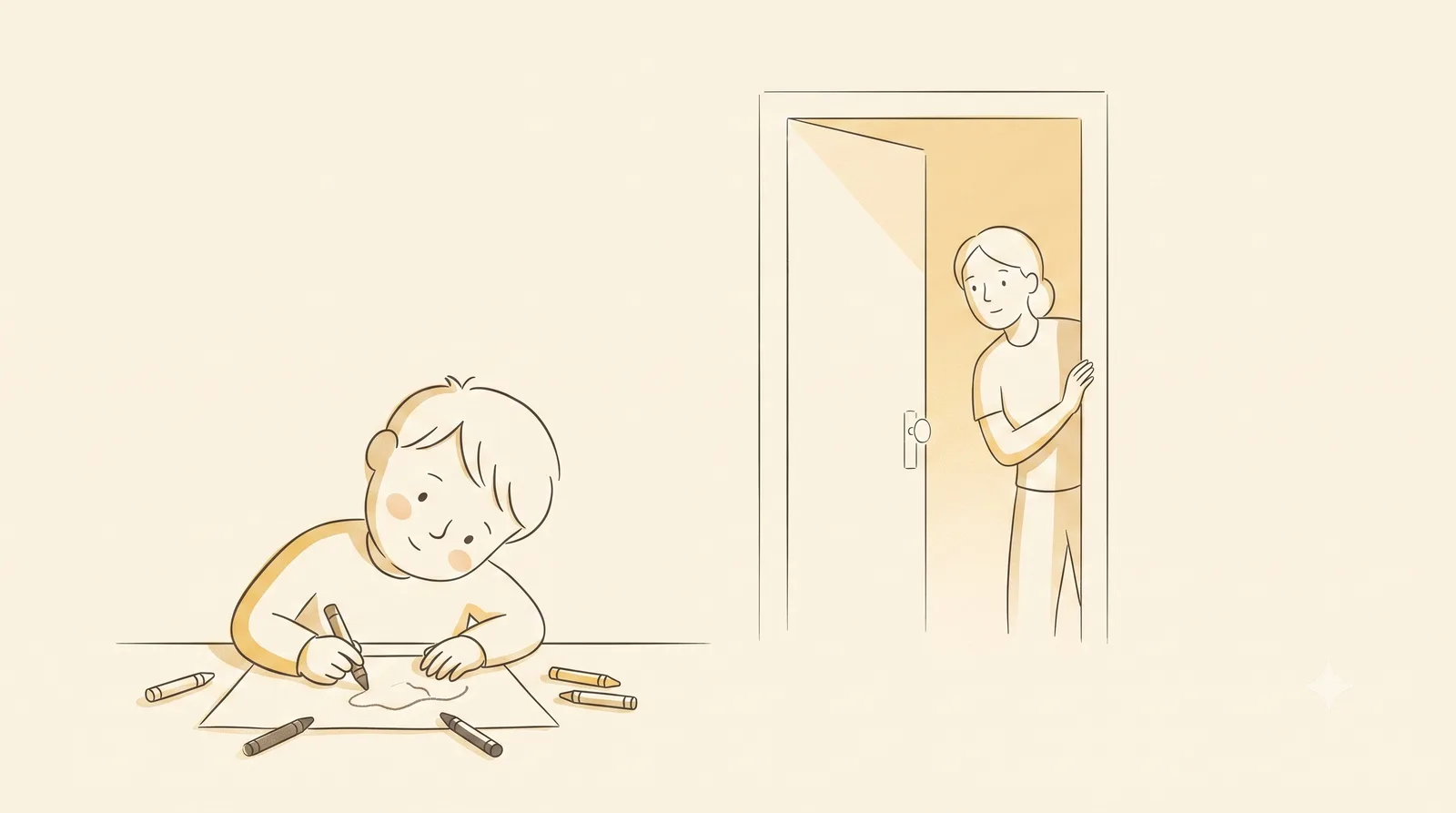
Your daughter is drawing at the table and her face keeps drifting down towards the paper, closer and closer, until her nose is almost on the crayon. Or your son scoots up to the television, again, after you've moved him back twice. Small things. Easy to miss in a busy evening, and easy to put down to a phase.
Sometimes they are just a phase. Children sit close to things because the world is interesting and their arms are short. But a handful of these little habits can also be early hints that a child's eyes aren't seeing as clearly as they could, and those are worth noticing.
Here's the reassuring part first. None of these signs is a diagnosis, and none of them means something is wrong. They're just nudges to get your child's eyes checked, which is a simple, ordinary thing to do. Below are six of the most common, what each one might point to, and, importantly, what it doesn't necessarily mean.
Why does my child squint at things?
Squinting is the one most parents notice first. A child narrows their eyes to look at the TV, the whiteboard, a face across the room.
There's a reason it works. Pinching the eyelids almost shut cuts down the blur and sharpens things up for a second, the same way you might squint at a distant sign while driving. So when a child does it again and again to make out something far away, it can be a sign of short-sightedness (myopia), where distant things look fuzzy. The American Optometric Association lists squinting among the everyday signs of a vision problem in young children.
What it doesn't automatically mean: that your child needs glasses tomorrow. Children squint in bright sunlight too, or when they're tired, or simply out of habit. One squint at a far-off bird proves nothing. It's the pattern, the squinting that shows up every time they look at something across the room, that's worth mentioning to an eye doctor.
Why does my child sit so close to the TV?
A child curled up a foot from the screen is a classic image, and usually it's harmless. Young eyes focus comfortably up close, and kids like to be near the thing they love.
But there's a version of it worth a second look. A child who has to sit close, who shuffles back up the moment you move them, or who holds a book or a tablet right up against their face, may be doing it because that's the only distance at which things look clear. The same goes for holding a phone or a storybook unusually near. The AOA flags both "sitting close to the TV" and "holding a book too close" as signs to keep an eye on.
What it doesn't necessarily mean: trouble. Plenty of children sit close purely out of habit or because they're absorbed in a cartoon, not because they can't see from the sofa. The thing to watch is whether they can happily see from a normal distance when you ask, or whether they always drift back in.
Why does my child tilt their head to one side?
This one is easy to miss because it looks like a quirk. A child tips their head, or turns their face a little to the side, when they're concentrating on the television or a book.
A persistent tilt can be the body's way of finding a clearer angle. The American Academy of Ophthalmology notes that turning the head to the side "may be a sign of a refractive error, including astigmatism", and that tilting helps the child see better. Astigmatism is just an unevenly shaped cornea that blurs vision a touch at every distance, and it's common and very correctable.
What it doesn't always mean: an eye problem. Head tilts can come from posture, from the angle of the screen, or from nothing at all. But a tilt that you see often, especially paired with squinting, is a good reason to get those eyes looked at, partly because a head tilt can occasionally point to an eye-muscle issue too.
Why does my child rub their eyes so much?
All children rub their eyes. They do it when they're sleepy, when they've been crying, when there's dust or pollen about.
So eye rubbing on its own rarely means much. Where it earns a closer look is when it shows up during or after close work, after a stretch of reading, drawing, or screen time, rather than just at bedtime. Eyes that are straining to focus get tired and itchy, and a child who can't say "my eyes ache" will rub instead. The AAO points out that frequent rubbing, while most often down to allergies, can sometimes go with a refractive error like nearsightedness.
What it usually isn't: a reason to worry on its own. Most eye rubbing is tiredness or allergies, plain and simple. It's the combination, rubbing plus squinting, plus sitting close, plus tired eyes after homework, that adds up to something worth checking.
Why does my child get headaches after reading or screens?
Headaches in children have a long list of ordinary causes: hunger, a poor night's sleep, a stuffy room, a bug going round. Most have nothing to do with the eyes.
But there's a particular pattern that does. Headaches or sore, tired eyes that turn up after close work, reading, homework, a stretch on a tablet, can be a sign that the eyes are working overtime to keep things in focus. This is especially true with long-sightedness (hyperopia), where, as the AAO explains, a child can read the eye chart across the room perfectly well yet has to strain to focus up close, which brings on eye strain and headaches. One case-control study found that twice as many children with headaches and similar aches had uncorrected vision problems and needed glasses.
What it doesn't mean: that every headache is about the eyes. Far from it. But headaches that cluster around reading and screens, and ease off when your child stops, are exactly the kind of thing to flag at an eye exam, because a regular school vision screening can easily miss this one.
Why does my child lose their place when reading?
This shows up once a child starts to read. They skip lines, lose their spot on the page, re-read the same sentence, or use a finger to keep track far longer than you'd expect.
It's tempting to read it as a focus problem or a reading difficulty, and sometimes it is. But the eyes have to work together smoothly to track a line of text, and when they don't, or when the words are slightly blurred, keeping your place becomes genuinely hard. The AAO lists losing your place while reading, avoiding close-up activities, and a short attention span among the quieter signs of a vision problem, the ones easily mistaken for restlessness.
What it doesn't necessarily mean: that your child can't see. New readers lose their place all the time simply because reading is hard and new. The reason it's on this list is that a vision check is a quick, cheap thing to rule out before assuming it's anything else, and an uncorrected vision problem can quietly hold a child's reading back.
What should I do if I notice these signs?
First, don't panic, and don't try to diagnose it yourself. A single sign on its own usually means nothing. It's worth acting when one of these is persistent, or when a few of them turn up together. The honest move in either case is the same: book a proper eye check.
That means a full eye exam, not the quick screening done at a school health camp or a paediatrician's well-child visit. Those screenings are useful, but they're a coarse net, the AOA notes they can miss a large share of children with real vision problems, hyperopia especially, because a child can read a distance chart and still be straining up close. A full exam from an eye specialist tests far more.
In India, that specialist is usually a paediatric ophthalmologist (an eye doctor with training in children's eyes) or an optometrist who sees children. Most cities have eye hospitals with a dedicated children's department, and a paediatrician can point you to a good one. Elsewhere it's much the same: a paediatric ophthalmologist or an optometrist, whichever your family already sees.
On timing, even without any warning signs, the AOA suggests a thorough eye exam between ages 3 and 5, and another around the time a child starts school. The full schedule starts earlier than that, from the newborn check onward, and we've set it out in a parent's guide to children's eye check-ups. If you're already noticing something, you don't have to wait for the next milestone. Just go.
The last thing worth saying is the most reassuring. If it does turn out your child needs glasses, that is a completely normal, ordinary outcome, and an easily fixed one. Children's eyes are still developing through these early years, which is exactly why catching a problem early matters so much, the fix tends to work best when it's started young. A pair of glasses, sorted in an afternoon, and the world comes into focus.
Eyesight isn't the only thing worth minding as children grow up around screens. If you're thinking about screen habits more broadly, our guide to how far a phone should be from your child's face covers the distance side of it, and if short-sightedness is on your mind in particular, childhood myopia in India digs into why rates are climbing and what actually helps. Should a prescription keep creeping up year after year, myopia control for children covers what an eye doctor might suggest next.
Found this useful?
Send it to a parent who’d want it.
Related reading
Myopia control for children: glasses, atropine, and lifestyle
Your child needs glasses, and now you're hearing words like atropine and ortho-K. Here's what myopia control actually means, and what to ask the eye doctor.
children's eyes · myopia

Outdoor time and your child's eyesight: the two-hour rule
Of everything studied to protect a child's eyes, time outdoors is the strongest. What the two-hour rule means, and how busy families fit it in.
children's eyes · myopia